
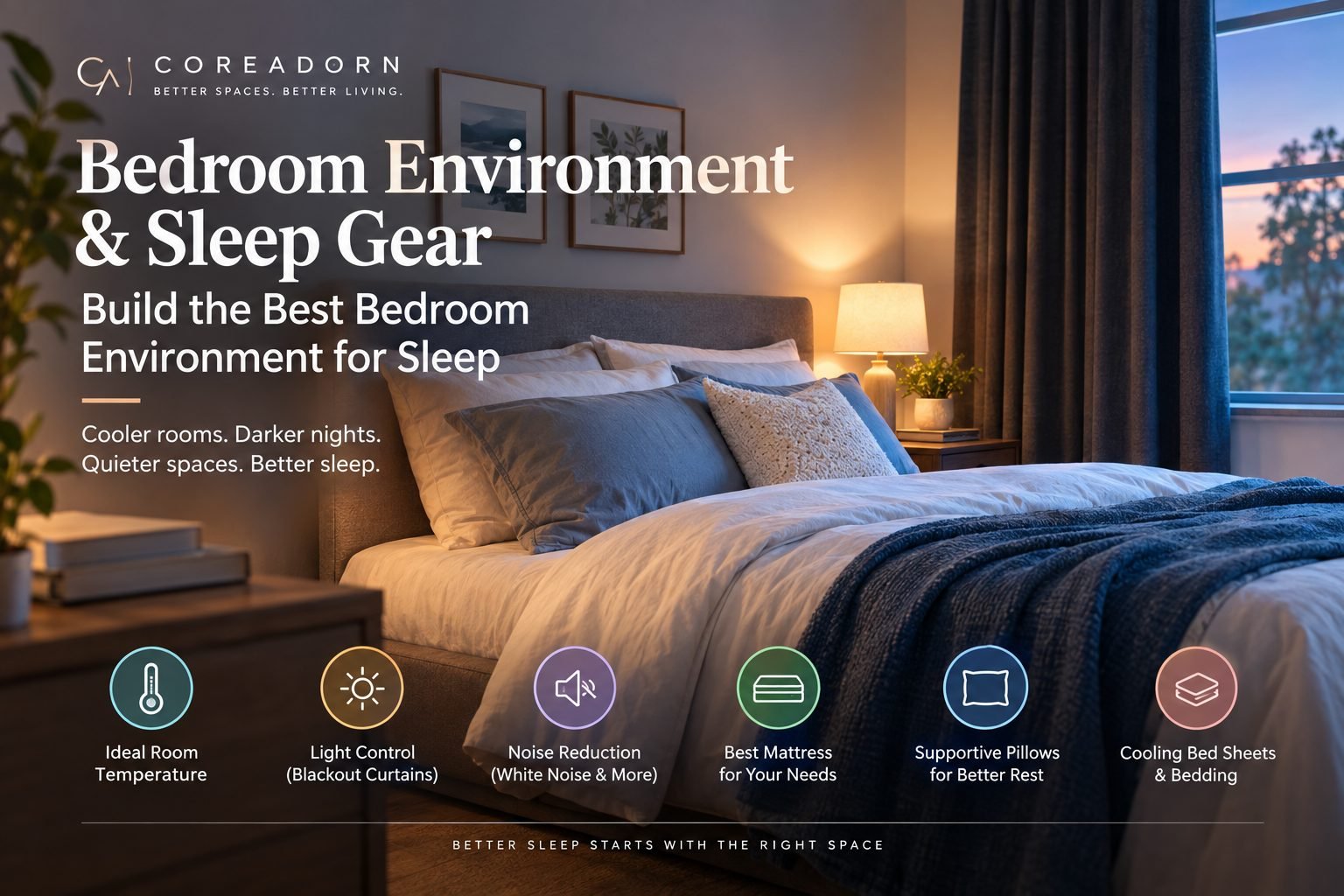
Bedroom Environment & Sleep Gear: Build the Best Bedroom Environment for Sleep
Create a better sleep space with practical, evidence-based tips for temperature, light, noise, mattresses, pillows, cooling sheets, and other sleep gear. Learn what to prioritize, what to look for when shopping, and how to build a bedroom that supports more comfortable, consistent sleep.
Poor sleep does not always start with your bedtime routine. Sometimes, the problem is the room itself.
A bedroom that runs too warm can leave you uncomfortable. Streetlights can make the room too bright. Traffic, neighbors, pets, or an active HVAC system can interrupt quiet sleep.
Your bed matters too. An unsupportive mattress, the wrong pillow, or sheets that trap heat can make a comfortable night harder to achieve.
The good news is that you do not need to redesign the entire room. Start with the factor that disrupts your sleep most often. Then choose sleep gear that solves that specific problem.
Quick Answer: What Makes the Best Bedroom Environment for Sleep?
The best bedroom environment for sleep is cool, dark, quiet, comfortable, and free from unnecessary distractions . Start with temperature, light, and noise control, then choose a mattress, pillow, and bedding that match your sleeping position, body temperature, and comfort preferences.
The Science Behind the Best Bedroom Environment for Sleep
Your bedroom affects several conditions that support sleep, including body temperature, exposure to light, and environmental noise.
You do not need a laboratory-perfect bedroom. You need a room that consistently removes the things that disturb your sleep.
Bedroom Temperature for Sleep
A commonly recommended bedroom temperature range is around 60 - 67°F (16 - 19°C) , although the best temperature varies from person to person.
Your bedding, pajamas, humidity, age, activity level, and personal comfort can all affect how warm or cool you feel.
Practical starting point: Keep the room comfortably cool and adjust from there.
If you regularly wake up hot, look beyond the thermostat.
Your mattress, sheets, comforter, and pillow can hold or release heat differently.
For hot sleepers, consider:
- Breathable sheets
- A lighter comforter
- Moisture-managing sleepwear
- A mattress with good temperature regulation
- A breathable pillow
- A bedroom fan or appropriate HVAC setting
Source: [Insert Link to authoritative sleep-temperature research]
Keep the Bedroom Dark
Light plays a major role in the body's circadian system.
Bright light at night can make it harder for the body to shift toward its normal nighttime state.
Look for light coming from:
- Windows
- Streetlights
- Hallway lights
- TVs
- Alarm clocks
- Chargers and electronics
Blackout curtains, blinds, shades, or an eye mask can help reduce unwanted light.
You do not necessarily need to make the room completely dark. Focus on removing light that bothers you or reaches your eyes during the night.
Source: [Insert Link to CDC, NIH, or peer-reviewed circadian rhythm research]
Control Bedroom Noise
Noise can be one of the hardest bedroom problems to fix because you may not control its source.
Common examples include:
- Traffic
- Construction
- Neighbors
- Barking dogs
- Snoring
- HVAC systems
- Apartment doors
- Street activity
Start by identifying the sound that wakes you.
Then match the solution to the problem.
Possible fixes:
- White-noise machine
- Fan
- Earplugs
- Heavier curtains
- Door seals
- Rugs
- Moving the bed away from a noisy wall
- Closing windows during peak noise periods
A steady background sound can also help mask sudden environmental changes.
Source: [Insert Link to WHO or peer-reviewed sleep/noise research]
When you buy through links on our site, we may earn an affiliate commission at no extra cost to you. This helps support our work.
Sleep Gear Upgrades That Can Change Your Night
Sleep Gear Upgrades That Can Change Your Night
Once the room itself works well, look at the products you use every night.
Do not buy sleep gear simply because the packaging says "premium," "cooling," or "sleep technology."
Look at the problem the product solves.
Mattress: Start With Support and Comfort
Your mattress has a direct effect on how your body feels throughout the night.
The right choice depends on your sleeping position, body type, comfort preference, and whether you share the bed.
Look at these factors before buying:
- Firmness
- Pressure relief
- Support
- Motion isolation
- Edge support
- Temperature regulation
- Material
- Trial period
- Warranty
- Return policy
- Delivery and setup
Best Mattress Considerations by Sleeping Position
Side sleepers: Look for enough cushioning around the shoulders and hips while maintaining spinal support.
Back sleepers: A balanced feel can help support the lower back without excessive sinking.
Stomach sleepers: A firmer surface may help prevent excessive sinking around the midsection.
Combination sleepers: Look for a responsive mattress that allows easy position changes.
There is no single mattress that works for everyone.
A generous US sleep trial can reduce the risk of buying the wrong mattress. Read the return terms before ordering.
Pillows: Match the Pillow to Your Sleeping Position
A pillow should support your head and neck without forcing them into an uncomfortable angle.
Your sleeping position gives you a useful starting point.
Side sleepers: Usually need more loft to fill the space between the head and mattress.
Back sleepers: Often prefer medium loft and enough support to keep the head from tipping too far forward.
Stomach sleepers: Usually do better with a lower-profile pillow.
Your mattress also changes the equation.
A softer mattress allows the shoulder to sink farther into the surface. That can change the pillow height you need.
Adjustable-fill pillows can be useful if you are unsure about the right loft.
Cooling Bed Sheets: Look Beyond the "Cooling" Label
If you sleep hot, your sheets deserve more attention.
Cooling bed sheets can feel different depending on the fiber, weave, fabric weight, and how the rest of your bedding handles heat and moisture.
Common options include:
- Cotton percale
- Linen
- Lyocell
- Some bamboo-derived rayon fabrics
- Lightweight cotton blends
Percale often feels crisp and breathable.
Linen has an open, airy feel and can work well for people who dislike heavy bedding.
Lyocell can offer a smooth feel and good moisture management.
Do not judge sheets by thread count alone. A higher number does not automatically mean cooler or more comfortable bedding.
Look at the complete construction of the sheet and how it works with your mattress protector, comforter, and sleepwear.
Create a Personalized Sleep Sanctuary
A good bedroom does not need to look like a luxury hotel.
It needs to work for you .
Start with the problem that affects your sleep most.
Step 1: Find Your Biggest Sleep Disruptor
Do I wake up because I am too hot?
Start with temperature control and breathable bedding.
Does outside light wake me?
Improve window coverage.
Does noise interrupt my sleep?
Try sound masking, earplugs, or physical noise reduction.
Does my body hurt or feel uncomfortable?
Review your mattress and pillow.
Do my sheets feel hot or heavy?
Try a lighter, more breathable bedding setup.
This approach prevents unnecessary purchases.
Step 2: Build the Room in the Right Order
You do not need to buy everything at once.
- Temperature
- Light
- Noise
- Mattress
- Pillow
- Sheets
- Comforter
- Optional sleep accessories
Fix the environment before adding more gadgets.
Step 3: Build a Cooling Sleep Setup
Hot sleepers can start with a simple combination:
- Cool bedroom temperature
- Breathable sheets
- Lightweight comforter
- Breathable pillow
- Mattress with good temperature regulation
- Moisture-managing sleepwear
The goal is not to make every product "cooling."
The goal is to prevent the entire bedding system from trapping excessive heat.
Step 4: Make the Room Darker
Start with the windows.
If streetlights or early morning sunlight affect your sleep, consider:
- Blackout curtains
- Blackout shades
- Room-darkening blinds
- An eye mask
Check the edges of the window covering. Small gaps can still allow noticeable light into the room.
Step 5: Make the Room Quieter
Start with the source.
If outside traffic is the issue, window and sound-control changes may help.
If intermittent sounds are the problem, consistent background noise may make those sounds less noticeable.
For apartment bedrooms, also consider the wall behind the bed. Moving the bed to another wall can sometimes make a noticeable difference.
Step 6: Do Not Turn Your Bedroom Into a Gadget Showroom
Smart sleep products can be useful.
But more technology does not automatically mean better sleep.
A simple bedroom with good temperature control, darkness, low noise, comfortable bedding, and a supportive mattress may work better than a room filled with devices.
Buy gear that solves a real problem.
How to Spend More on Sleep Gear Without Wasting Money
Premium sleep products can cost hundreds or even thousands of dollars.
That does not mean every expensive product deserves a place in your bedroom.
Before buying, ask:
- Will I use this every night?
- Does it solve a problem I actually have?
- Can I test it at home?
- What is the return window?
- Who pays return shipping?
- Is there a restocking fee?
- How long is the warranty?
- What happens if the product develops a problem?
- Does the company offer US-based customer support?
For mattresses especially, read the return policy before placing the order.
A long trial period sounds attractive, but the details can vary considerably between brands.
Bedroom Environment Checklist
Use this quick checklist before buying more sleep gear.
Room
- Bedroom feels comfortably cool
- Unwanted light is blocked
- Sudden noise is reduced or masked
- Electronics do not create unnecessary light
- Bedroom feels comfortable rather than cluttered
Bed
- Mattress provides comfortable support
- Pillow matches sleeping position
- Sheets feel comfortable at your normal sleep temperature
- Comforter matches the season
- Bedding does not trap excessive heat
Shopping
- Product solves a real problem
- Trial period checked
- Return policy checked
- Warranty checked
- Shipping and setup costs checked
- Customer reviews checked for recurring problems
Frequently Asked Questions About Bedroom Environment & Sleep Gear
What is the best temperature for sleeping?
Many sleep experts recommend roughly 60 - 67°F (16 - 19°C) as a starting range. Personal comfort, bedding, humidity, and individual factors can change the ideal temperature.
Source: [Insert Link]
Are blackout curtains good for sleep?
Yes. Blackout curtains can reduce unwanted bedroom light from streetlights, headlights, and early morning sunlight.
Source: [Insert Link]
What are the best sheets for hot sleepers?
Breathable options such as cotton percale, linen, and some lyocell fabrics can work well. Fabric construction and your complete bedding setup also affect heat retention.
Source: [Insert Link]
How often should you replace a mattress?
There is no universal replacement date. Consider replacing it when it loses support, develops significant deterioration, or consistently causes discomfort.
Source: [Insert Link]
What is the best pillow for sleeping?
The best pillow depends on your sleeping position, body shape, mattress, and comfort preference. Side sleepers often need more loft, while stomach sleepers generally prefer a lower profile.
Fix the Room Before Buying More Gear
The best bedroom environment for sleep is not necessarily the most expensive one.
Start with the problem that keeps disturbing your sleep.
- Too hot? Improve temperature control and bedding breathability.
- Too bright? Fix the windows.
- Too noisy? Reduce or mask the sound.
- Uncomfortable? Reconsider your mattress and pillow.
Then add sleep gear only when it serves a clear purpose.
A well-designed bedroom should make it easier to relax, fall asleep, and stay comfortable through the night.
Start with one problem. Fix it well. Then see what still needs attention.
CoreAdorn is reader-supported. When you buy through links on our site, we may earn an affiliate commission.
0 Comments
Be the first to comment.
Leave a comment
Please use kind words and keep your comment on topic. Comments are reviewed by the CoreAdorn team before they appear.