
Houseplant Watering Masterclass: How to Water Without Causing Root Rot
Learn how to water houseplants without causing root rot. This practical guide covers the soak-and-dry method, bottom watering, soil moisture checks, fungus gnats, drainage, and tap water quality so you can keep your plants healthy and thriving.
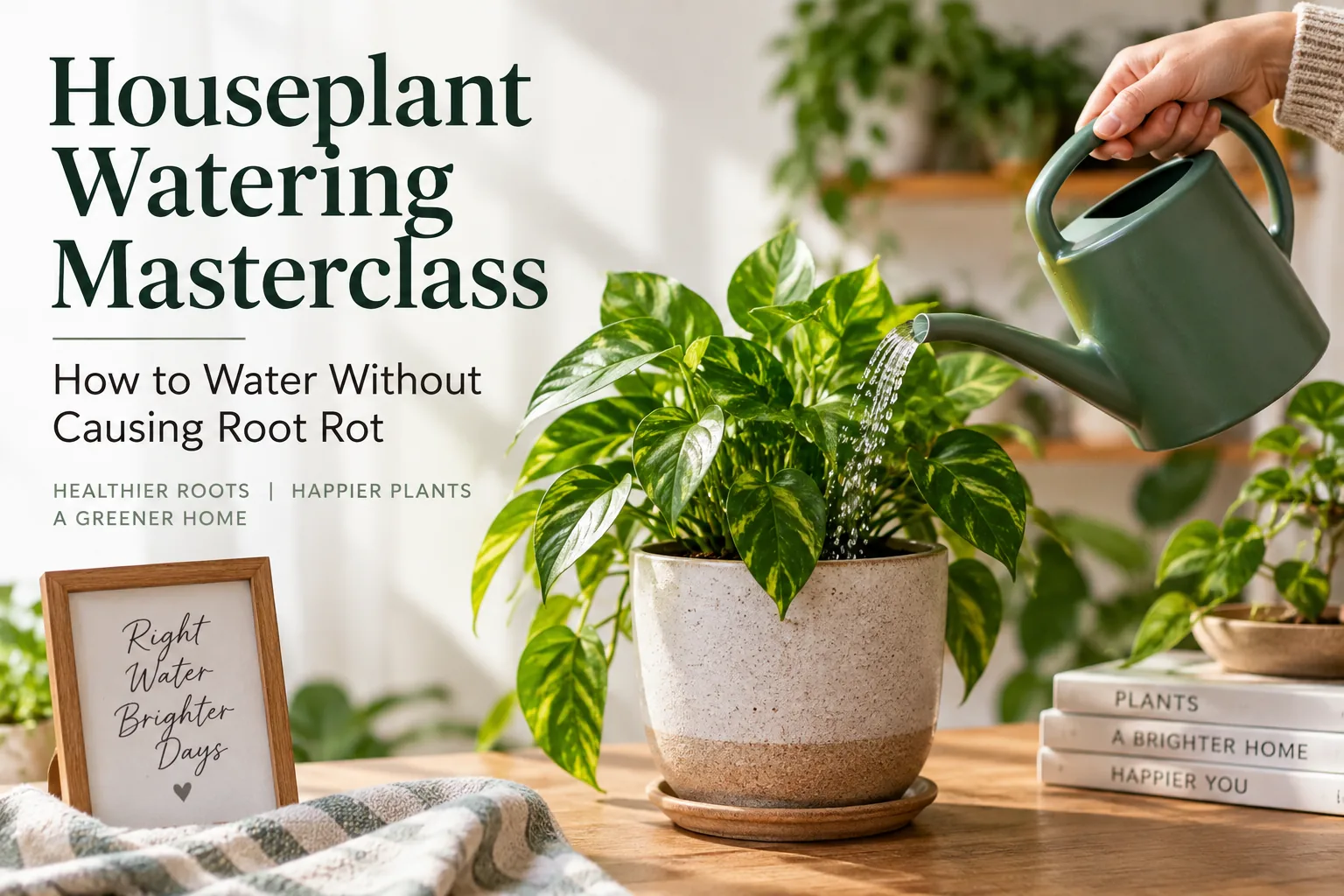
Watering is one of the easiest ways to keep a houseplant healthy—and one of the easiest ways to kill it. Overwatering kills more houseplants in American homes than bugs, neglect, and bad light combined, largely because plant owners water on a fixed schedule instead of responding to the plant and its soil.
The good news is that proper houseplant watering is simple once you understand what the roots actually need. Healthy roots need moisture and oxygen. Soil that stays constantly saturated pushes out the air spaces roots need for aeration, creating conditions that can lead to root rot.
Quick Answer
Fixed watering schedules often fail because plants dry at different rates depending on species, pot size, soil, light, temperature, and humidity. Instead, check the soil with the finger test and water when the plant actually needs it.
Why a Watering Schedule Doesn't Work
A houseplant should be watered according to soil moisture, not according to the calendar. A plant sitting near a sunny window may dry out much faster than the same plant in a dim room.
Even two identical plants can need water at different times because their pots, soil, roots, and growing conditions differ. A weekly watering routine might work for one plant while keeping another dangerously wet.
Light is one of the biggest factors affecting how quickly soil dries. Plants receiving strong indirect or direct light can use water faster than plants growing in lower-light conditions.
For a deeper explanation of how light affects indoor plants, see our Comprehensive Guide to Houseplant Light Requirements .
Before watering, check the soil.
For most common houseplants, insert your finger about 1–2 inches into the soil. If the soil feels dry at that depth, it is usually time to water.
If the soil still feels noticeably moist, wait a few days and check again.
A soil moisture meter can also help, particularly with large pots where your finger cannot reach the root zone easily. Use the meter as a guide rather than treating its reading as an absolute rule.
When you buy through links on our site, we may earn an affiliate commission at no extra cost to you. This helps support our work.
The Soak-and-Dry Method
The soak-and-dry method means thoroughly watering the root ball and then allowing the appropriate amount of soil to dry before watering again.
When your plant needs water, slowly pour water over the soil surface. Continue watering until you see water flowing freely from the drainage holes at the bottom of the pot.
This thorough soaking helps distribute moisture throughout the root zone instead of leaving only the top layer wet.
Once water begins draining, allow the excess to leave the pot completely. If the plant sits inside a decorative cachepot or saucer, empty the collected water after several minutes.
Why Water Must Drain From the Bottom
Water draining from the bottom confirms that moisture has moved through much of the potting mix. It also helps flush accumulated minerals from fertilizer and tap water.
A pot without adequate drainage makes this process much harder. Excess water can remain trapped around the roots, reducing oxygen and increasing the risk of root problems.
Why Sitting in Standing Water Is Dangerous
A plant should not sit in a puddle of water for extended periods.
When the bottom of the pot remains submerged, the soil can stay saturated for too long. The roots receive less oxygen, and conditions become more favorable for root rot.
After watering, check the saucer or decorative outer pot. Drain standing water rather than allowing the root ball to soak in it.
How Long Should You Let Soil Dry?
There is no universal number of days between waterings.
Instead, monitor the moisture level. Some plants prefer the top few inches of soil to dry before watering, while others need consistently more even moisture.
For example, many succulents and drought-tolerant plants need a much longer dry period than tropical houseplants.
Knowing your plant's natural moisture preference is more useful than following a generic "water every seven days" rule.
Top Watering vs. Bottom Watering
Top watering is the best everyday method for most houseplants, while bottom watering can be useful for plants with very dry or compacted soil and certain pest-management situations.
Top Watering
Top watering involves pouring water directly onto the potting mix from above.
Water slowly and evenly around the soil surface rather than dumping a large amount in one spot. Continue until excess water flows from the drainage holes.
This method is convenient and allows you to see how quickly water moves through the soil.
It can also reveal drainage problems. If water immediately races through the pot, the soil may be heavily compacted or the potting mix may have become hydrophobic.
Bottom Watering
Bottom watering means placing a drainage-hole-equipped pot in a container of water and allowing the potting mix to absorb moisture upward.
This can work well when the soil has become extremely dry and water runs down the sides without properly wetting the root ball.
It can also be useful for plants that benefit from keeping their foliage dry.
However, bottom watering does not automatically prevent root rot. Leaving a pot in water for too long can still keep the roots excessively wet.
Can Bottom Watering Help With Fungus Gnats?
Bottom watering may help reduce the consistently wet surface conditions that fungus gnats prefer, particularly when you avoid keeping the top layer of soil damp.
Adult fungus gnats lay eggs in moist organic potting mix. Allowing the appropriate upper layer of soil to dry between waterings can make the environment less attractive to them.
Bottom watering is therefore a useful tool, but it is not a complete fungus-gnat treatment. Soil moisture management, sanitation, sticky traps, and other appropriate controls may be needed when an infestation is established.
Water Quality Matters More Than Many Plant Owners Realize
Sensitive houseplants can react to minerals and chemicals in tap water, so water quality may matter when plants repeatedly develop brown or crispy leaf tips despite proper watering.
Municipal tap water can contain disinfectants such as chlorine or chloramine, along with dissolved minerals. Most houseplants tolerate ordinary tap water without problems, but some sensitive plants can respond poorly to the mineral buildup that develops over time.
Plants such as Calatheas, prayer plants, and some Spider Plants can develop brown or crispy leaf edges when environmental stress, mineral accumulation, low humidity, or water quality issues are present.
Water quality is only one possible cause. Before blaming tap water, also check humidity, fertilizer use, temperature, light exposure, and watering habits.
Tap Water vs. Filtered Water
If your tap water is hard or leaves visible mineral deposits, filtered water can be worth trying.
A simple household water filter may reduce some dissolved minerals, depending on the filtration system. However, not every filter removes the same substances.
If you're dealing with a particularly sensitive plant, compare its response after consistently using the same water source for several weeks.
When Distilled Water Makes Sense
Distilled water contains very few dissolved minerals, making it an option for particularly sensitive plants or situations involving high-mineral water.
You don't need distilled water for every houseplant. Using it across a large collection can become expensive and inconvenient.
For most plants, ordinary tap or filtered water is perfectly adequate. Reserve distilled water for plants that consistently show problems that appear related to water quality, or when your local water is known to contain high levels of dissolved minerals.
Should You Let Tap Water Sit Overnight?
Letting tap water sit overnight can allow some chlorine to dissipate, but it is not a reliable way to remove chloramine or dissolved minerals .
If your goal is to reduce water-treatment chemicals or mineral content, use a filtration method designed for the specific issue rather than relying solely on an overnight rest.
Signs You Are Overwatering
Yellowing leaves, persistently wet soil, foul-smelling roots, and soft or collapsing stems can indicate that a plant is staying too wet.
Watch the soil before looking at the leaves alone. A yellow leaf does not automatically mean overwatering because yellowing can also result from aging, nutrient problems, insufficient light, pests, or other stress.
Look for several symptoms occurring together.
- Soil remains wet for many days.
- Leaves turn yellow while the soil stays saturated.
- Lower leaves become soft or drop.
- Stems become weak or mushy.
- Roots become brown, black, or soft.
- The potting mix develops an unpleasant smell.
- Fungus gnats repeatedly appear around persistently moist soil.
The combination of wet soil plus declining plant health is much more meaningful than any single symptom.
Signs Your Plant Needs Water
Dry soil and a pot that feels noticeably lighter are two of the most useful indicators that a houseplant may need water.
Check the soil at the appropriate depth for the plant rather than judging moisture from the surface alone.
Other clues can include drooping leaves, curling foliage, or leaves that feel less firm than usual. These signs vary by species, so learn the normal appearance of each plant.
A dry-looking surface does not always mean the entire root zone is dry. This is particularly common with large containers.
How Pot Size Changes Watering
Large pots usually retain moisture longer than small pots, so plant size and container size should be considered when deciding when to water.
A small plant in a small nursery pot may dry rapidly because there is relatively little soil holding moisture.
A smaller plant placed in a large decorative container can have the opposite problem. The excess soil around the root ball may remain wet for a long time.
Choose a pot that provides enough room for root growth without dramatically oversizing the container.
How Soil Affects Watering
Well-structured potting soil should hold enough moisture for the plant while retaining air spaces that support healthy roots.
Dense, compacted soil can restrict drainage and reduce aeration .
A well-designed houseplant mix usually contains a combination of moisture-holding organic material and components that improve drainage and air space. The ideal mix depends on the plant.
Succulents, orchids, aroids, ferns, and moisture-loving tropical plants can have very different soil requirements.
If water sits on the surface instead of soaking into the soil, investigate the potting mix rather than simply watering more frequently.
Watering Different Types of Houseplants
Different plants have different moisture requirements, so watering technique should match the species rather than using one routine for your entire collection.
| Plant Type | Let Soil Dry? | Watering Approach |
|---|---|---|
| Snake Plant | Yes | Allow substantial drying between waterings. |
| ZZ Plant | Yes | Water thoroughly, then let soil dry. |
| Pothos | Partly | Water when the upper layer becomes dry. |
| Monstera | Partly | Allow the upper portion of soil to dry. |
| Fiddle Leaf Fig | Partly | Water thoroughly after the appropriate drying period. |
| Calathea | Less | Avoid letting the root zone become completely dry. |
| Ferns | Usually less | Maintain more consistent moisture. |
| Succulents | Yes | Allow soil to dry substantially. |
| Peace Lily | Partly | Water before prolonged severe wilting. |
Fiddle Leaf Figs are especially sensitive to inconsistent watering and changes in their growing conditions. If you grow one, see our Ultimate Fiddle Leaf Fig Care Guide for a more detailed look at watering, light, soil, humidity, and general care.
These are starting points rather than rigid rules. Light, temperature, humidity, pot size, soil composition, and season can dramatically change how quickly soil dries.
A Simple Houseplant Watering Routine
Check the soil first, water thoroughly when appropriate, and always allow excess water to drain.
- Check the soil with your finger or a soil moisture meter .
- Consider the plant's species and normal moisture preference.
- Feel the potting mix several inches below the surface when appropriate.
- Water slowly and thoroughly when the plant needs it.
- Continue until water exits the drainage holes.
- Allow excess water to drain completely.
- Empty the saucer or cachepot.
- Check the plant again after several days rather than automatically watering on a fixed schedule.
This takes less than a minute once you get used to it.
What to Do If You Suspect Root Rot
If root rot is suspected, stop following your normal watering schedule and inspect the root system if the plant's condition warrants it.
Remove the plant carefully from its container and examine the roots.
Healthy roots are generally firm rather than mushy. Rotten roots may appear dark, soft, slimy, or have an unpleasant odor.
If significant root damage is present, remove clearly damaged roots with clean tools and repot the plant into an appropriate fresh, well-draining mix and a suitable container.
Do not automatically move every struggling plant into a dramatically larger pot. A smaller container that matches the remaining root system may be more appropriate.
The Biggest Houseplant Watering Mistakes
Most watering problems come from watering too often, poor drainage, or treating every plant as if it has the same moisture requirements.
Watering on the Same Day Every Week
A calendar cannot measure soil moisture.
Check the plant instead.
Giving Small Amounts of Water Frequently
A few tablespoons every couple of days can create a persistently damp upper layer while failing to thoroughly hydrate the root zone.
For plants that prefer the soak-and-dry method, water thoroughly and then allow the appropriate drying period.
Ignoring Drainage
A beautiful decorative pot is not a substitute for drainage holes.
Keep plants in containers that allow excess water to escape.
Watering Because the Leaves Look Sad
Drooping can result from both underwatering and overwatering.
Check the soil before adding more water.
Using the Same Watering Routine for Every Plant
Your cactus and Calathea do not have the same watering requirements.
Group plants by moisture preference instead of watering the entire collection at once.
Continue Your Houseplant Care Journey
Mastering water is just one piece of the puzzle. See our complete framework in the Ultimate Guide to Indoor Plants and Houseplants .
You can also continue with our supporting guides:
- Ultimate Fiddle Leaf Fig Care Guide — detailed care advice for one of the most popular but demanding indoor trees.
- Comprehensive Guide to Houseplant Light Requirements — learn how light exposure affects plant growth and watering needs.
A strong watering routine works even better when you understand light, humidity, soil, pot selection, fertilization, and the specific needs of each plant.
Frequently Asked Questions
How often should I water my houseplants?
Water when the soil reaches the appropriate dryness level for that plant rather than watering on a fixed schedule. Many common houseplants may need water every 1–2 weeks, but conditions can make that interval much shorter or longer.
How do I know if my houseplant is overwatered?
Persistently wet soil combined with yellowing leaves, soft stems, declining growth, or mushy roots can indicate overwatering. Check the soil and roots rather than relying on leaf color alone.
Should I water houseplants from the top or bottom?
Either method can work when used correctly. Top watering is the simplest everyday approach, while bottom watering can help thoroughly rehydrate very dry soil and can reduce surface moisture when managed properly.
Does bottom watering prevent fungus gnats?
Bottom watering can reduce consistently wet surface conditions, but it does not guarantee fungus-gnat prevention. Fungus gnats are associated with moist organic potting mix, so controlling soil moisture is one part of managing them.
Is tap water bad for houseplants?
Most houseplants tolerate tap water, but sensitive plants may react to mineral buildup or water chemistry. If brown leaf tips persist, consider water quality along with humidity, fertilizer, light, and other environmental factors.
Is distilled water better for plants?
Distilled water can be useful for plants sensitive to dissolved minerals, but most houseplants do not require it. Filtered or ordinary tap water may be adequate depending on your local water quality.
Should I let tap water sit overnight before watering?
Letting water sit may allow some chlorine to dissipate, but it does not reliably remove chloramine or dissolved minerals. A suitable filtration system is a better choice when water chemistry is the concern.
Can overwatering cause root rot?
Yes. Overwatering can contribute to root rot by keeping soil saturated and reducing the oxygen available around roots. Poor drainage and compacted soil can make the problem worse.
Should I use a soil moisture meter?
A soil moisture meter can be useful for large pots or beginners who have difficulty judging soil moisture by touch. Use it alongside knowledge of the plant's moisture needs rather than treating the meter reading as a universal watering rule.
Final Takeaway
The safest houseplant watering routine is simple: check first, water thoroughly, drain completely, and wait until the plant actually needs water again.
Forget the idea that every plant needs water every Sunday.
Touch the soil. Look at the plant. Consider the light, pot, soil, season, and species. Then water accordingly.
That small change can prevent many of the problems associated with chronic overwatering and help your plants develop healthier root systems.
How do you currently decide when it's time to water your houseplants— the calendar, the finger test, a soil moisture meter, or the appearance of the plant?
CoreAdorn is reader-supported. When you buy through links on our site, we may earn an affiliate commission.
0 Comments
Be the first to comment.
Leave a comment
Please use kind words and keep your comment on topic. Comments are reviewed by the CoreAdorn team before they appear.